
A tide reminder can be useful long before a coastal outing. It can prompt someone to recheck access hours, estimate when a shoreline may become narrower, or decide when to look at updated conditions. What it cannot do is certify that the water is safe. A personal reminder, a tide prediction, a marine forecast, and an official warning are different tools with different jobs.
That distinction matters for low-impact coastal planning. Leaving at the wrong time can lead to an unnecessary drive, a rushed launch, or a trip that puts pressure on sensitive access points. Treating a planning notification like an official safety message creates a more serious problem: the reminder may be based on an old preference while wind, thunderstorms, visibility, surf, local closures, or other hazards have changed.
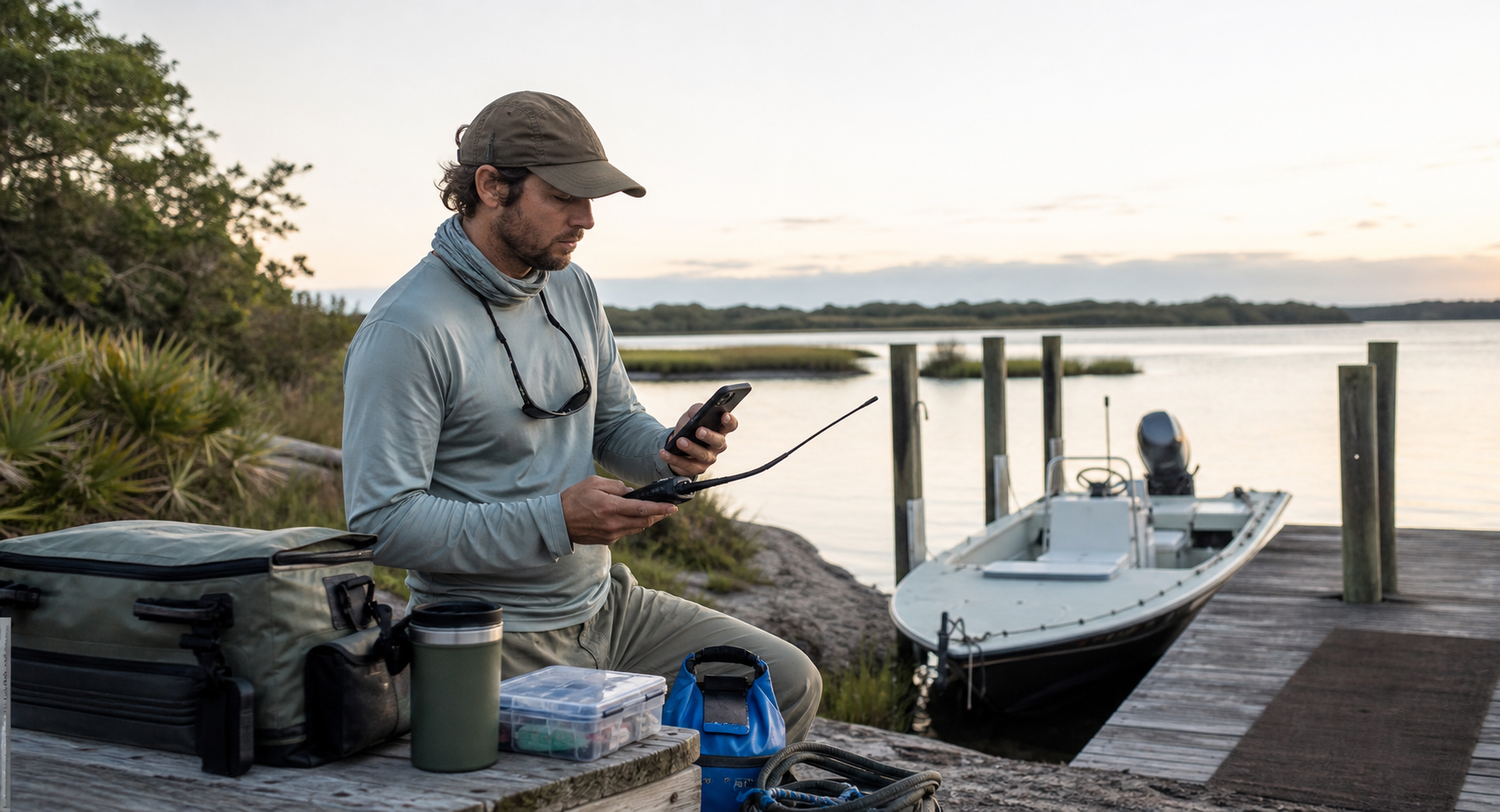
Start with Three Separate Information Layers
A practical check-in routine begins by separating information into three layers. The first layer is astronomical planning. The NOAA Ocean Service explanation of tide tables describes tables as predictions of daily high and low tides for specific locations. Those predictions can help with timing questions, but they are not a forecast of every condition a person will encounter at the shore.
The second layer is the marine forecast. The National Weather Service marine portal is the official starting point for coastal forecasts and marine weather information in the United States. It should be checked directly for the relevant zone or location close to departure, rather than inferred from a saved tide time.
The third layer is active official hazard information. Watches, warnings, advisories, special marine messages, beach flags, closure notices, and directions from local authorities may change the decision entirely. A personal alert is not a substitute for any of them. If an official source says conditions are unsafe or access is closed, the plan changes.
| Information layer | Typical source | Useful for | Required follow-up |
|---|---|---|---|
| Personal reminder | Calendar, saved place, or planning app | Prompting a scheduled recheck | Open current official sources |
| Tide prediction | NOAA station prediction | Estimating high- and low-tide timing | Check weather, warnings, access, and observations |
| Marine forecast | National Weather Service | Reviewing expected marine conditions | Refresh close to departure and during a longer outing |
| Official warning or closure | NWS, local authority, or posted notice | Communicating a current hazard or access restriction | Change, postpone, or cancel the plan as directed |
What a Personal Tide Reminder Is Good For
A well-designed reminder is a prompt to perform another check. It can say, in effect, “This is the time you planned to review the trip again.” It may be tied to a preferred water-level window, a parking schedule, daylight, or a personal calendar. The useful action is not obeying the reminder automatically; it is opening the current official sources that apply to the outing.
For anglers who want a more structured way to use tide alerts as planning reminders, the safest interpretation is procedural: save a time, then recheck the forecast, warnings, access rules, and observed conditions before acting. The reminder organizes attention. It does not make a go-or-no-go decision.
This approach also keeps expectations realistic. A predicted stage of the tide does not guarantee fish activity, a clear launch, or a comfortable return. It simply adds one piece of timing context to a larger decision.
Build a Two-Stage Check-In Routine
The first check happens while the plan is still flexible, often the evening before or early enough to choose another location. Review the tide prediction for the relevant station, the marine forecast, daylight, local access information, and any known restrictions. Use this pass to decide whether the outing still makes sense and whether a lower-impact alternative is available.
The second check happens shortly before departure and again at the access point. Open current official sources instead of relying on a screenshot or yesterday’s forecast. Look for changes in wind, visibility, storms, surf, local warnings, and closures. Compare those updates with what is actually visible at the site. If conditions are different from the plan, stop and reassess.
The National Weather Service’s safe-boating guidance for before a trip recommends checking the latest forecast and buoy observations and carrying appropriate safety and communication equipment. Separately, the U.S. Coast Guard’s float-plan guidance explains why a reliable person ashore should have the route and expected return information. Those steps remain relevant even when the outing is short or close to home.
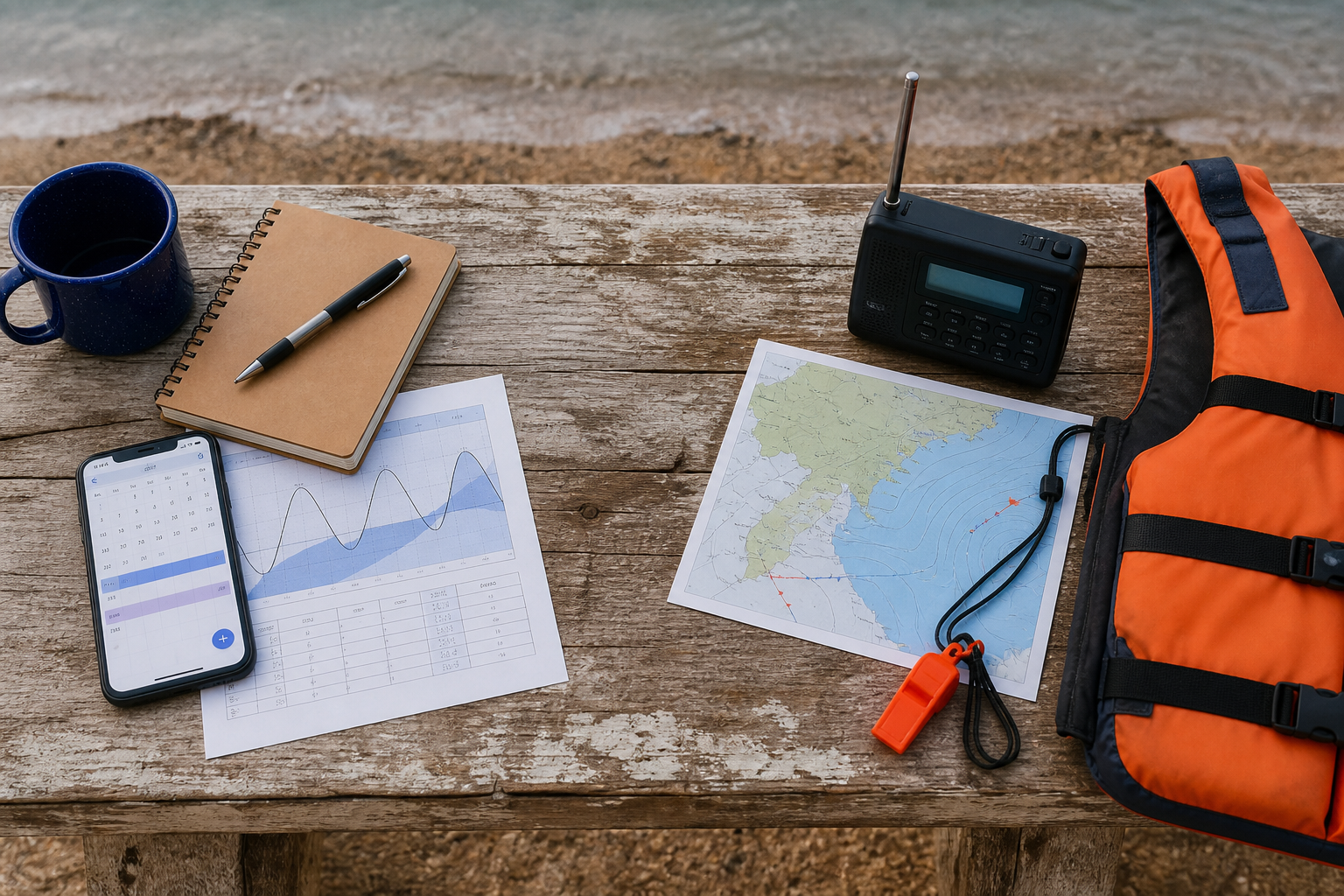
Keep the Reminder and the Warning Channel Separate
Mixing every notification into one stream makes it easy to miss which source carries authority. A simple separation helps:
- Personal planning channel: calendar entries, saved locations, tide reminders, gear lists, and notes from prior outings.
- Official conditions channel: the current National Weather Service forecast, official alerts, local emergency information, posted flags, closure notices, and instructions from responsible authorities.
- On-site observation: visibility, wind, waves, traffic at the launch, shoreline width, debris, and access conditions that may not match the earlier plan.
The personal channel can initiate a check, but it should never silence or override the official channel. Turning off an inconvenient warning, relying on a stale screenshot, or assuming a calm morning will remain calm all day defeats the purpose of a check-in routine.
Plan the Return, Not Just the Arrival
Many timing mistakes happen because the plan focuses on the moment of arrival. A better routine considers the full window: travel, setup, the outing itself, cleanup, and the return through the same access point. A beach that is broad at one predicted stage may offer less room later. A sheltered departure may become an uncomfortable return if the forecast changes.
Our earlier guide to using tide timing for lower-impact coastal days explains why water-level timing can help visitors avoid trampling narrow vegetation or crowding limited access. The same principle applies here: use the prediction to prepare, then use current conditions and official guidance to decide.
Set an explicit turnaround time before leaving. If the forecast worsens, an official warning appears, the access point changes, or the group cannot keep to the return window, the outing can end early without debate.
Use an Offline Backup Without Treating It as Current
Mobile service can be inconsistent near the coast. Saving station names, local authority contacts, a simple route, and emergency information before departure is sensible. An offline copy is still a snapshot, however. It should be labeled with the time it was saved and refreshed whenever connectivity allows.
For low-connectivity trip ideas, our offline coastal-day planning guide offers ways to prepare entertainment and reduce unnecessary data use. Safety information belongs in a different category: it should be refreshed from an official source as close to the decision as practical.
Two Examples of Better Decisions
Example one: the reminder arrives, but the forecast has changed. An angler receives a reminder for a preferred tide window. The current marine forecast now calls for conditions outside the person’s experience, and a local warning is active. The reminder did its job by triggering a check. The correct response is to postpone or choose a safe land-based alternative, not to defend the original plan.
Example two: the forecast is acceptable, but the access point is not. The tide prediction and forecast look workable, yet the launch is closed or visibly obstructed. The group does not create an informal path through vegetation or move barriers. It uses the alternate plan or goes home. Responsible access is part of the decision, not an inconvenience to work around.
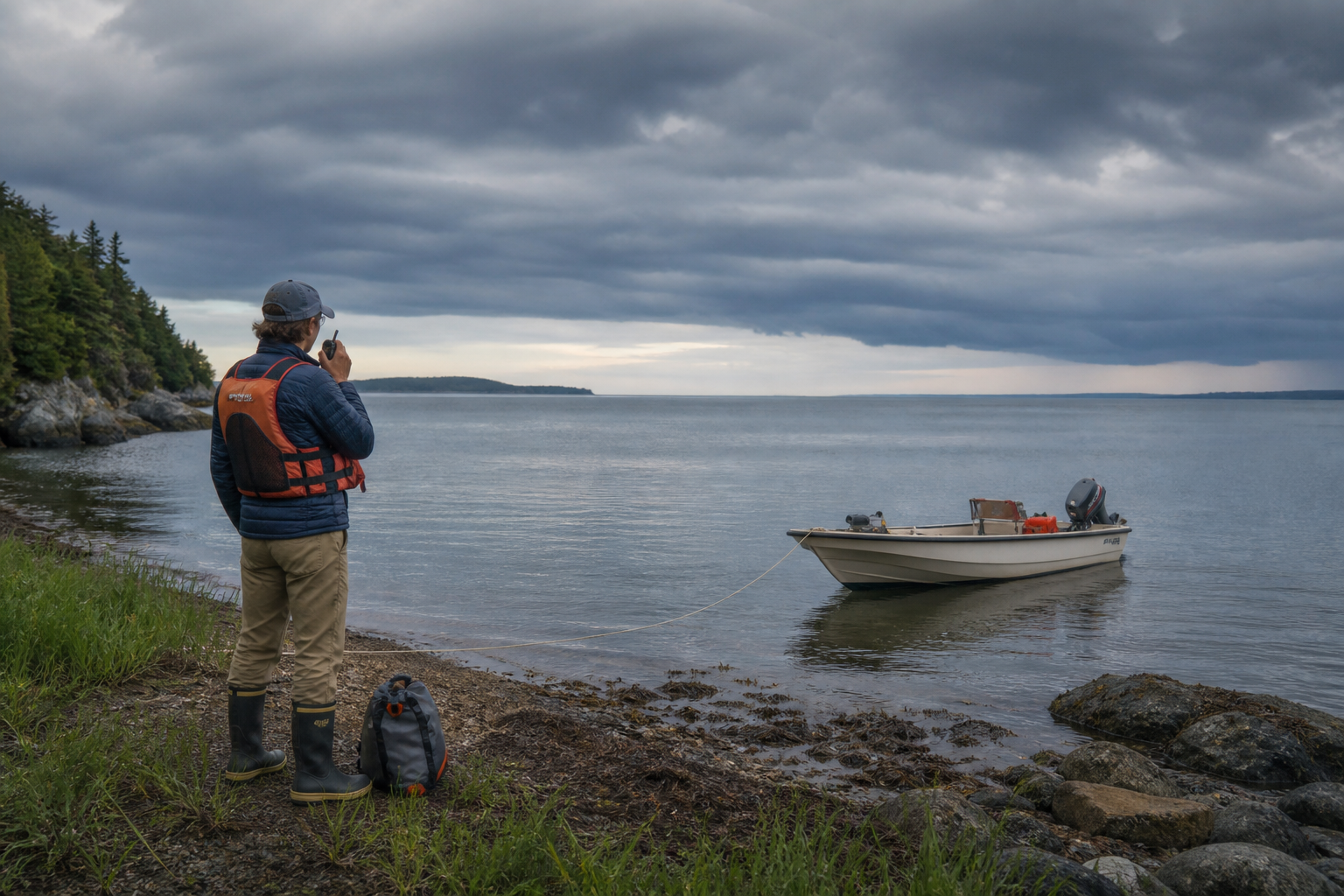
A Compact Coastal Check-In Checklist
- Identify the correct tide station and note when the prediction was checked.
- Open the current official marine forecast for the relevant area.
- Check official warnings, advisories, local closures, and posted access information.
- Confirm life jackets, communication equipment, lighting, water, and first-aid supplies.
- Leave a float plan with a reliable person ashore, including the destination, participants, expected return, and what to do if the group is late.
- Set a turnaround time and a simple cancel condition before leaving.
- At the site, compare the plan with observed wind, water, visibility, and access.
- Leave without launching if official guidance or observed conditions exceed the group’s preparation.
Frequently Asked Questions
Is a tide reminder an official marine warning?
No. A tide reminder is a personal planning prompt. Official warnings and marine forecasts come from responsible government and local authorities.
Can a tide prediction show whether coastal conditions are safe?
No. A tide prediction estimates astronomical water-level timing for a station. It does not replace current forecasts, warnings, local access information, or on-site judgment.
When should I refresh a marine forecast?
Check during planning and again close to departure. Refresh it whenever conditions change or the trip lasts long enough that an earlier forecast may no longer describe the return window.
What should happen when a reminder and an official warning conflict?
The official warning controls the decision. Postpone, cancel, or choose a safe alternative rather than following the personal reminder.
Why check the access point after checking online sources?
Local closures, debris, crowding, damaged facilities, and observed water or weather conditions may differ from the earlier plan. The on-site check is a final opportunity to stop safely.




0 Comments